

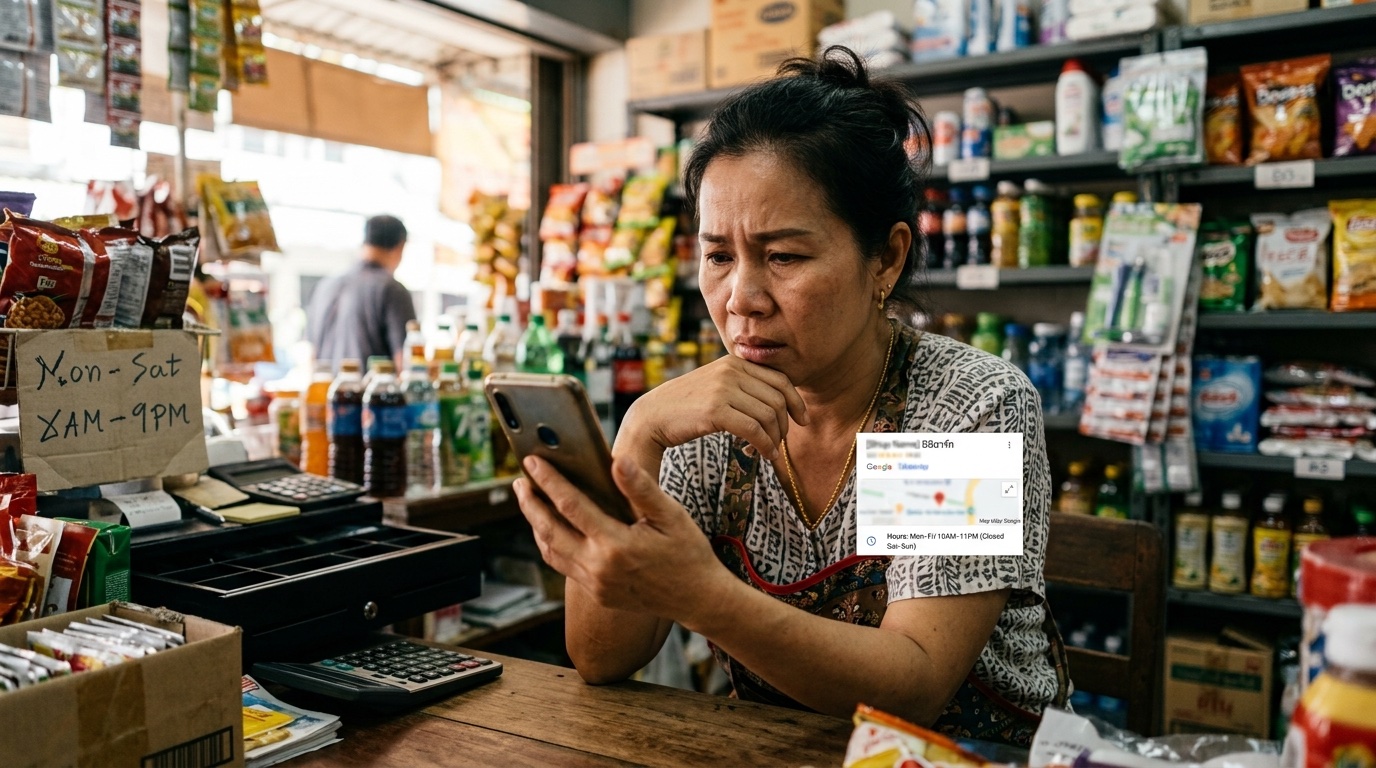
A customer asks an AI chatbot on an airline's website about bereavement fares. The chatbot answers confidently, and wrongly—inventing a refund policy that doesn't actually exist. The customer books based on that answer, gets denied the discount afterward, and takes the airline to a tribunal. This isn't a hypothetical risk scenario. It's Moffatt v. Air Canada, decided in February 2024, and it's the case every business with any AI-generated customer-facing content needs to understand—not as a cautionary anecdote, but as settled legal precedent.
It sounds like a story about a chatbot malfunction, something an engineering team fixes with a patch. It's actually a story about who's responsible when an AI says something false on a company's behalf, and the tribunal's answer was unambiguous: the company is, regardless of whether a human or an algorithm wrote the words. This article walks through exactly what that ruling establishes, the separate and murkier question it doesn't answer—what happens when the AI getting your business wrong isn't yours to control at all—and what a Thai business can actually do about both risks.
A settled ruling already holds businesses responsible for what their own AI tools tell customers—and even where a third-party AI's mistake about you falls outside that ruling, the reputational cost still lands on your business either way.
The Air Canada Precedent, Precisely
In Moffatt v. Air Canada, Air Canada's website chatbot told a customer he could apply for a bereavement fare discount retroactively, after booking a full-price ticket—advice that contradicted the airline's actual policy, which required the discount request before travel. When Air Canada refused to honor what the chatbot had promised, the customer brought the case to the British Columbia Civil Resolution Tribunal. In February 2024, the Tribunal ruled against Air Canada for negligent misrepresentation, awarding the customer roughly CAD 650 in damages plus interest and fees—a modest amount, but the legal principle behind it is what matters.
Air Canada's defense was, in effect, that the chatbot was responsible for its own words—a separate source of information the airline shouldn't be held to the same standard for as its official policy pages. The Tribunal rejected that argument outright, finding that a chatbot is simply part of a company's website, and the company remains responsible for whatever information appears there, whether it comes from a static page or a conversational AI feature. The American Bar Association's coverage of the case frames it plainly: companies remain liable for information their AI chatbots provide.
The Authorship Gap: Why Your Chatbot's Words Are Your Words
Call it the Authorship Gap—the mistaken assumption that because an AI system generated the words, the business that deployed it gets some distance from responsibility for what those words said. The Tribunal's ruling closes that gap entirely for any AI tool a business directly builds, licenses, or deploys on its own platform. If your website has a chat assistant, a booking bot, or an automated FAQ system, its statements carry the same weight as anything printed on your official policy page—there's no legal discount for the format the wrong information arrived in.
That's a narrower principle than it might first sound, and it's worth being precise about its boundary. The ruling addresses AI tools a business operates and controls. It doesn't extend automatically to a general-purpose AI system a business has no relationship with at all—which is where the harder, less settled question begins.
The Harder Question: When It's Not Your AI at All
Here's the risk the Air Canada case doesn't resolve: what happens when Google's AI Overviews or ChatGPT—systems no individual business operates—generates a wrong answer about that business's hours, prices, or policies, pulled from outdated or misread information somewhere on the open web? There is no equivalent settled ruling establishing who bears legal responsibility in that scenario, and this article isn't claiming there is one.
But the practical risk doesn't wait for the law to catch up. A customer who shows up expecting a promotion that ended months ago, or calls asking about a service the business never offered, doesn't distinguish between "your own chatbot told me that" and "an AI search result told me that about you." The confusion, the wasted trip, and the review left afterward land on the business regardless of who's ultimately liable in a legal sense. Reputational exposure here is real and immediate, even where legal exposure remains an open question.
Reducing the Odds: What Actually Correlates with Accurate AI Answers
There's no guaranteed fix for a third-party AI misrepresenting your business, but the available evidence points to a meaningful correlation worth acting on. A large-scale analysis by Ahrefs found that pages AI systems already choose to cite are roughly three times more likely to carry structured, machine-readable business data than pages that go uncited—a pattern that likely reflects the same underlying habit: businesses that keep their information clean, current, and consistent across their website and directory listings give AI systems less room to guess, and less stale or conflicting information to draw the wrong answer from. We cover what that same study does and doesn't prove about earning AI citations directly, versus just correlating with good information hygiene, here—the causal driver looks to be overall information hygiene, not any single technical fix.
Picture this: Ekamai Paws Veterinary Clinic inherits someone else's mistake
Picture a hypothetical business called Ekamai Paws Veterinary Clinic, a small veterinary practice in Bangkok. A pet owner asks an AI search assistant whether the clinic offers 24-hour emergency care. The assistant answers yes, confidently—an answer nobody at the clinic ever wrote or approved. At 2am, a distressed owner arrives with a sick dog to find the clinic closed, the actual after-hours line unanswered because it had been discontinued months earlier. The clinic hadn't built or controlled the AI tool that gave the wrong answer. What it eventually traced the error to was its own Google Business Profile, which still listed the old after-hours number and had never been updated after the policy changed. Fixing that one listing didn't guarantee every AI system would get it right going forward, but it removed the specific stale source the wrong answer had most likely come from.
The Accountable Business Playbook
- Own What's Yours — audit any AI chatbot, booking assistant, or automated response tool your business directly deploys, including wherever you've chosen an AI assistant over LINE OA for handling first questions. The Air Canada ruling means you're responsible for what it says, with no format exception.
- Correct at the Source — keep hours, prices, and policies accurate and identical everywhere a machine might read them: your website, Google Business Profile, and any directory listing, since that's the raw material third-party AI answers are built from.
- Monitor the Answer, Not Just the Listing — periodically ask major AI tools the exact questions a customer would ask about your business, the same way you'd spot-check a directory listing for errors.
- Document the Correction Trail — when you catch a wrong AI-generated answer about your business, record where you fixed the underlying source and when, in case a customer dispute later references what they were told.
A dental clinic advertising a limited-time promotion faces the identical exposure the moment that promotion ends: if the old price lingers anywhere machine-readable, an AI system has no way to know it expired, and the clinic is the one fielding the confused phone call.
Accountable: what it all comes down to
If there's one word for what this whole area of risk comes down to, it's Accountable—not because a business necessarily controls everything an AI says about it, but because the work of noticing, correcting, and living with the consequences still lands on the business either way.
So here's the question worth sitting with: if you asked a major AI tool right now what your business's hours, prices, and current policies are, would the answer match what's actually true today—and if it didn't, would you have found out from the AI, or from a frustrated customer standing at your door?
FAQ
Is my business legally liable for what ChatGPT or Google's AI Overviews says about it?
There's no settled ruling on that specific scenario yet. The one clear legal precedent, Moffatt v. Air Canada, established liability for a company's own AI chatbot—a tool it built and controlled—not for what a general-purpose, third-party AI system says about a business independently.
What exactly did the Air Canada case decide?
The BC Civil Resolution Tribunal ruled in February 2024 that Air Canada was liable for negligent misrepresentation after its website chatbot gave a customer false information about bereavement fares, rejecting the airline's argument that the chatbot bore its own separate responsibility.
Does keeping my business information accurate stop AI from hallucinating about it?
It doesn't guarantee it, but the available evidence shows a real correlation: pages AI systems already cite are far more likely to have clean, structured, current information than pages that go uncited. Reducing stale or conflicting information reduces the raw material an AI has to guess from.
What should I do if I find an AI tool giving wrong information about my business?
Start by checking whether the source is something you control—your website, your Google Business Profile—and correct it there first. There's currently no universal, guaranteed process for forcing every AI provider to update an answer immediately, so treat source correction as the reliable first step.
Is the legal risk bigger for a chatbot I built myself versus a general AI search tool?
Based on the one settled precedent available, yes. A business is on clearer legal footing (or clearer legal exposure) for a tool it directly deploys than for a third-party AI system it has no relationship with, where liability remains an open legal question.
Can I demand an AI company correct a wrong answer about my business?
Practices vary by provider and continue to change. The more reliable lever available today is fixing the underlying source information the AI is likely drawing from, rather than relying on a direct correction request to a specific AI provider.
What this looks like with NAWA AI Websites
NAWA AI Websites puts real boundaries around any AI assistant we build for you—the same source-bounded discipline that separates a genuinely useful AI feature from AI Theater: it answers only from approved, current content, and it's designed never to invent availability, prices, or policies it wasn't given. That same discipline extends to keeping your published business information—hours, pricing, policies—consistent across your website and Business Profile, which is the raw material both your own AI tools and third-party AI search systems draw from.
If you want a review of where your business information might be stale, inconsistent, or exposed to this kind of risk, talk to us about an AI website and information accuracy review.
Sources: American Bar Association, "BC Tribunal Confirms Companies Remain Liable for Information Provided by AI Chatbot"; Ahrefs, "We Tracked 1,885 Pages Adding Schema. AI Citations…"